
BND Scope: Issue 18 - A Delayed Growth Surprise in the US Economy
From late November to the final week of the year, the US economy looks strong on paper but fragile underneath. The delayed GDP release points to a bright 4.3% growth in the third quarter, yet consumer confidence and debt data show that this momentum rests largely on higher-income households and increasingly debt-financed spending. Meanwhile, investment in pharmaceuticals, semiconductors and data centers signals long-term opportunities. But heading into 2026, the real question is: how sustainable is this growth, and who will actually feel it?
BND SCOPE
12/27/20258 min read


Because of the government shutdown, the third-quarter GDP data that should have been released at the end of October only came out on December 23. According to NBC, the US economy grew at an annualized rate of 4.3% in the third quarter, covering the July–September period – the strongest growth in the last two years. This figure clearly beat economists’ expectations of around 3.2%. If the upcoming revisions don’t change the picture too much, this means that, on paper, the US economy was quite dynamic over the summer.
Looking at the sources of this growth, three factors stand out in the official breakdown: household consumption, exports, and government spending. A decline in imports also contributed positively in the GDP calculation. On the consumer side, services – especially health spending and international travel – are in the spotlight. The data shows that Americans both used more health services and increased their overseas travel during the summer.
However, the backdrop reinforces the K-shaped economy narrative we highlighted in previous issues. NBC’s reporting makes it explicit: Even though consumption looks strong, the households doing most of that spending are predominantly higher-income. Middle- and lower-income groups, facing a weaker labor market, tariffs, and accumulated inflation, are much more cautious and are cutting back in many categories.
Another data point that clearly illustrates this divergence is household debt. According to the New York Fed, credit card balances increased by 24 billion dollars in the third quarter. Total credit card debt is about 5.75% higher than a year ago. In other words, what looks like strong consumption is not a broad-based, “good for everyone” rise in prosperity. One segment of households keeps spending, while others are trying to live within tighter means, and the gap in between is at least partially being bridged through higher borrowing.
On top of that, when we look at the full year, this bright third-quarter number settles into a more modest average. The economy contracted in the first quarter, then grew 3.8% in the second and 4.3% in the third. Taken together, the average growth rate for the first three quarters of the year is around 2.5% – neither a crisis-level weakness nor a spectacular boom.
While the third-quarter growth figures put a smile on policymakers’ faces, the confidence indices coming in during December don’t really match that upbeat picture. The Conference Board’s consumer confidence index fell to 89.1 in December, coming in below economists’ expectations and clearly below the peak levels seen at the start of the year. At the same time, AP and Reuters reporting notes that expectations for the next six months are approaching thresholds that historically line up with recession risk.
The survey details make the picture clearer: People are more pessimistic about job prospects, income expectations, and the overall economic outlook. Inflation, tariffs, rents, and insurance costs are among the most frequently cited sources of anxiety. So even if households are still spending money in stores and online, they’re not doing it because they feel comfortable; they’re mostly doing it with a “just getting by” mindset.
The University of Michigan’s December consumer survey tells a similar story. There is a slight improvement compared to November, but sentiment is still almost 30% lower than the same period last year. Another data point highlighted by NBC underlines the same point: Only 24% of respondents say their financial situation is better than a year ago, 35% say it is worse, and the remaining 41% feel there has been no change.
From this angle, the strong third-quarter growth numbers and December’s weak confidence readings are not actually contradicting each other; they are simply describing two different dimensions of the economy: realized growth in the recent past versus how people feel about the future today.
From the BND Scope perspective, 2026 is unlikely to be a simple story of “everything falling” or “everything rallying.” It will be a period that demands selectivity and preparation for both upside and downside scenarios. At BND Consulting, we will continue to read this fragmented picture through the lens of sector-specific opportunities and risks, and to provide insights that support your investment decisions.
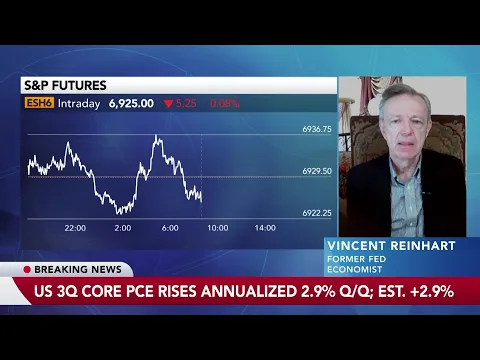
At the end of November, the data was still saying “there’s growth, no recession.” By late December, a delayed surprise was added to that picture: After months of being blocked by the government shutdown, the GDP report finally came out and showed that the economy grew much faster than expected over the summer. Still, even these strong numbers are not enough to fully reassure consumers and investors at year-end. In this issue, we look at the delayed growth figures together with falling confidence indices, housing and travel indicators, and the investment moves that are shaping 2026.
A Surprise 4.3% Growth in the Third Quarter
Consumer Confidence:
The Data Looks Strong, But People Feel Something Else
Inflation, Price Levels, and the Macro Outlook for 2026
The November CPI data shows that inflation is continuing to ease in terms of the rate of increase. Overall prices are about 2.7% higher than they were in the same month a year ago; in core inflation – excluding volatile items like food and energy – the annual increase is around 2.6%. Compared to the high-inflation wave that started in early 2021, these levels point to a clear normalization.
That said, what really matters for households is the new level of prices. In categories like rent, food, health insurance, energy, and many services, prices are still much higher than in the pre-pandemic period. Even if the inflation rate is falling, these items are not going back to their old levels; they are just rising more slowly. That’s why, in the US, the conversation is gradually moving away from the technical question of “What is the inflation rate?” and toward the question of “affordability”: After covering essential needs, how much is actually left in people’s pockets?
The Conference Board’s leading indicators, which give early signals about the future path of the economy, together with major banks’ December macro reports, paint roughly the following picture for the US in 2026:
Growth is likely to remain positive, but moderate and cautious,
The inflation rate may stay in the 2–3% range,
Lower interest rates and targeted incentives could support housing and some investment categories,
On the other hand, high debt levels, the election cycle, and uncertainty around trade policy will continue to act as downside risks.
This framework points to a “soft landing” scenario, but it’s important to acknowledge that this landing will not be felt equally by everyone. For higher-income groups, the period may look like “lower rates, manageable inflation, strong asset prices,” while for middle- and lower-income groups it may feel more like a world of persistently high price levels and a labor market that occasionally softens.
Real Estate Is Flat, Airlines Are Flying High
After the sharp braking in 2022–2023, the housing market is showing signs of having bottomed out by the end of 2025. According to data from the National Association of REALTORS, existing home sales in November rose 0.5% month-on-month. Sales are still well below the peaks seen during the pandemic, but compared with previous months, the trend is flat to slightly up.
Reports from real estate platforms like Zillow and Redfin draw a similar picture:
The pace of price increases has clearly slowed,
Rising inventory (the number of homes for sale) is modestly improving buyers’ bargaining power,
In some local markets, sellers are being forced to cut prices.
For first-time buyers, this could translate into a bit of breathing room. However, mortgage rates are still above historical averages, and the gap between income levels and home prices has not fully closed. In other words, housing will remain an area to watch in 2026 both as a source of opportunity and as an affordability challenge.
On the services side, and especially in air travel, the year-end season is extremely strong despite all the talk about economic slowdown. According to estimates cited by the Financial Times, a total of 309 million passengers will travel by air worldwide over the Christmas–New Year period, a substantial portion of which will be US domestic and US-origin flights. For airlines and the broader tourism sector, this means strong revenues – but it also brings operational and cost pressures along with it.
Conclusion
When we zoom out and look at the full picture of 2025, we see this: The US economy achieved strong growth over the summer – the 4.3% third-quarter performance makes that clear. But this growth is not evenly distributed over the year, nor is it a rise in prosperity felt equally by everyone. The picture is still relatively comfortable for higher-income groups and asset holders; for middle- and lower-income segments, however, the combination of high price levels, debt burdens, and a softening labor market translates into a more fragile foundation.
Consumer confidence and the broader debate around affordability push the core question for 2026 beyond the headline numbers: After households pay for rent, food, and energy, how much room do they really have left? On paper, inflation is normalizing, but price levels are settling at a new, higher plateau. That’s why, in the period ahead, it will not be enough to track only growth rates; we will also need to ask for whom this growth is being generated, under what conditions, and with how much leverage.
On the investment side, the story is more long-term. Projects in pharmaceuticals, semiconductor chemicals, and data centers show a strong flow of capital into the US production and technology base. But these investments, too, are now shaped within a clear political and regulatory frame; price pressure, energy debates, local politics, and geopolitical risks are becoming core parts of every strategic decision.
Investment Driven by Politics
Despite the fragile picture on the consumer side, when we look at long-term investment decisions, the US still clearly stands out as a hub for production, R&D, and infrastructure. In particular, news flow since mid-December in pharmaceuticals, data centers, and advanced manufacturing has been noteworthy.
In the pharmaceutical sector, the pricing agreement announced on December 19 between Novartis and the US administration is a key development. The company agrees to lower prices on certain drugs and to offer new medicines at similar price levels across high-income countries in the future; in return, it confirms a commitment to invest 23 billion dollars over five years in R&D and manufacturing infrastructure in the United States.
Around the same time, the Trump administration announced a series of deals with multiple large pharma companies as a “historic reduction in drug prices,” while claiming that the firms involved would shift more than 150 billion dollars of new manufacturing investment into the US. What stands out here is that pressure on drug prices and the goal of keeping investment onshore are being packaged together – pricing policy and industrial policy are becoming increasingly intertwined.
On the advanced manufacturing side, there is a notable step aimed at strengthening the semiconductor ecosystem. KPPC Advanced Chemicals, the US subsidiary of Taiwanese chemical company Kanto-PPC, broke ground on a new campus in Casa Grande, Arizona, to produce ultra-pure chemicals. Phase one of the project will be launched with an investment of over 120 million dollars, with production targeted to begin by late 2027. Over time, total investment is expected to reach around 500 million dollars by 2035.
Once the campus is fully ramped up, it is expected to provide around 200 skilled jobs, plus hundreds of additional positions during the construction phase and across the supply chain. The ultra-pure and specialty chemicals to be produced there will be used in wafer cleaning, etching, CMP, photolithography, and advanced packaging processes at US factories of companies such as TSMC, Intel, and Micron. KPPC’s plans to work with local community colleges and technical institutes on workforce development suggest that this project is being designed not just as a single plant, but as a regional semiconductor chemicals hub.
On the digital infrastructure front, data centers stand out. Through its funds, Ares Management has added a 314-acre site in a major Virginia data-center corridor to its portfolio, while also acquiring two more next-generation “hyperscale” (very high-capacity) data centers in the same state. These transactions show that the physical infrastructure required for AI and cloud computing continues to expand within the US. In parallel, some members of the US Senate argue that data centers built by large tech companies are pushing up electricity consumption and utility bills for local communities, and therefore call for stricter rules and mechanisms such as “pre-payment” for grid investments.
In short, the investment news in the second half of December tells us this: The US still attracts large-scale capital in pharmaceuticals, advanced manufacturing, and digital infrastructure – but that capital is now operating within a much more explicit political and regulatory framework. In pharma, we see “investment in exchange for lower prices”; in data centers, debates around energy costs and the burden on local communities; and in manufacturing, a mix of tariffs and incentives. Investment decisions are no longer just about the classic “cheap labor + large market” equation; they now need to be read together with regulation, energy, geopolitics, and local politics.
Consulting
Join
info@bnd.consulting
+1 (346) 296 - 8588
© 2026. All rights reserved.

800 Bonaventure Way Ste 116 Sugar Land TX 77479